Radon Gas Protection Membranes: Essential for Safe Construction
Starting a new construction project is an exciting time, but it’s important to consider potential environmental hazards like radon gas. This blog post will explore what radon is, why it’s important to consider during construction, and how radon gas protection membranes can help safeguard your building and the health of its occupants.
What is Radon Gas?
Radon is a naturally occurring radioactive gas that forms from the breakdown of uranium in soil and rock. It’s colorless, odorless, and tasteless, making it difficult to detect without proper testing. Radon gas can seep into buildings through cracks in the foundation, crawl spaces, or even through the water supply. While radon gas levels are typically low outdoors, they can become concentrated in enclosed spaces, posing a health risk.
Why Should You be Concerned About Radon?
UK Radon Maps and Risk Assessment:
To help assess radon risk in any construction project, the UK Health Security Agency (UKHSA) has developed a valuable resource: the UK Radon Map.
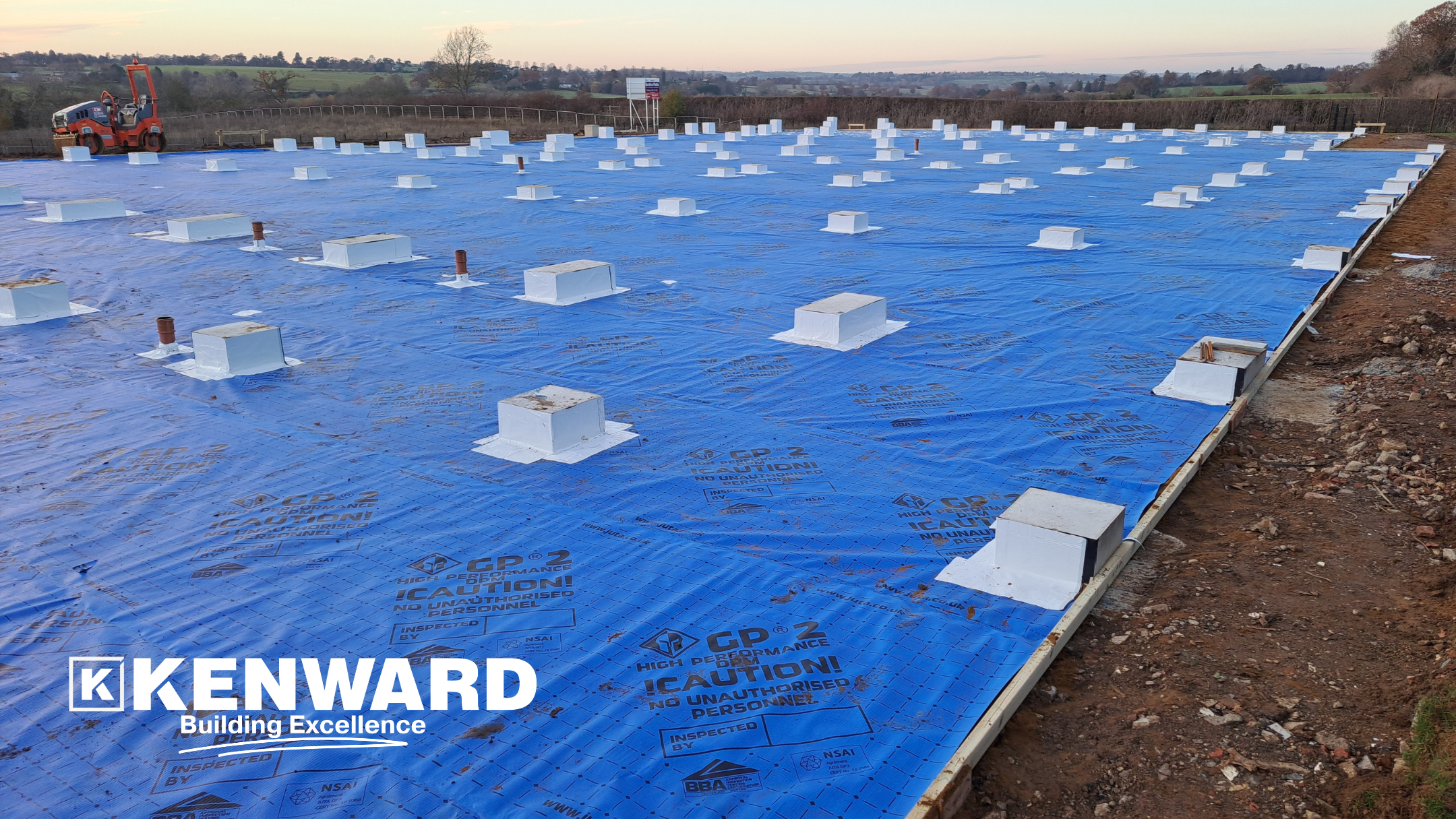
Radon gas protection membranes are a crucial element in safeguarding buildings from harmful gas ingress. These high-performance membranes act as a barrier, preventing radon gas from seeping into the building from the surrounding soil. Here at Kenward, we recommend Juta’s Titantech GP®2 as a reliable radon gas protection membrane solution. This multi-layered, low-density polyethylene membrane is reinforced with a polypropylene grid for added strength and durability.
Key benefits of Titantech GP®2:
- Multi-functional protection: In addition to radon gas, GP®2 offers protection against low levels of methane, carbon dioxide, and moisture vapor.
- Durability and performance: The reinforced design ensures long-lasting performance and resistance to tears or punctures during construction.
- Compliance and accreditation: GP®2 is independently tested and meets all relevant building codes and regulations.
How Can Radon Gas Protection Membranes Help?
Where are Radon Gas Protection Membranes Used?
The use of radon gas protection membranes is advisable in any area with even low levels of suspected radon gas. The GP®2 membrane is suitable for situations as outlined in CIRIA C665 SITUATION 2. For heavily contaminated sites, additional mitigation measures like venting systems might be necessary.
Radon gas is a real concern in the construction industry. By understanding the risks and incorporating radon gas protection membranes into the construction process, you can significantly reduce the risk of radon exposure and create a safer, healthier living environment.