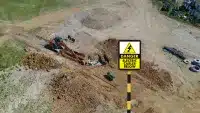
Avoiding Danger from Underground Services
Understanding the Risks:
Underground services such as electricity cables, gas pipes, water pipes, and telecommunications cables are essential but can pose significant dangers if damaged during construction activities. The potential risks include:
In addition, damage to underground services can cause significant disruption and environmental damage, can delay the project and can incur considerable cost.
Key Elements of a Safe System of Work
Planning the Work: Before beginning any excavation, plan to avoid underground services where possible. Where it is not possible, plan to minimise the risk of damage. Obtain detailed, up-to-date service plans from utility companies. Conduct thorough site surveys to identify the exact locations of underground services and allocate sufficient time and resources.
Locating and Identifying Services: Carry out a comprehensive survey of the work area suing appropriate survey tools and equipment, such as cable locators and ground-penetrating radar. Conduct trial holes to verify the locations of services.
Safe Excavation Practices: Ensure supervisors and operatives have sufficient skills, knowledge, and experience to carry out excavations and that safe working practices are in place and followed. Implement a permit-to-work system and maintain clear communication throughout the project.
Regular Training and Updates: Regularly train your team on the latest safety protocols and updates in underground service management. Ensure all team members are aware of the
Best Practices for Safe Excavation
Emergency Procedures
Accidental damage to underground services can have severe consequences. In such situations, immediate and appropriate action is crucial to ensure the safety of all personnel and minimize further risks.
Evacuate the Area: The first priority is to ensure the safety of everyone on site. Evacuate all personnel from the immediate vicinity of the damaged service. If the damage involves a gas pipe or electricity cable, expand the evacuation zone to prevent wider exposure.
Notify Authorities: Contact the relevant utility provider immediately. For gas leaks, call the National Gas Emergency number (0800 111 999). For electricity, water, or telecommunications, use the emergency contact details provided by the utility companies. Provide them with precise information about the location and nature of the damage.
Secure the Site: Implement measures to prevent access to the damaged area until it is declared safe. This may involve setting up barriers, warning signs, and having personnel on hand to monitor the area. Ensure that all sources of ignition are eliminated, particularly in the case of a gas leak.
Documentation: Document the incident with photos and detailed notes. This information is vital for utility providers to assess the damage and for Kenward to review and improve safety protocols. Ensure that all details are accurate and submitted to the relevant authorities and company officials promptly.
Specific Actions for Different Services
When dealing with emergencies involving different types of underground services, it is crucial to follow specific procedures tailored to each service to ensure safety and mitigate risks effectively.
Prohibit smoking and extinguish all naked flames and other sources of ignition within at least 5 meters of the leak. Assist gas transporter staff, police, or fire services as requested.
If a live cable is struck, instruct drivers to remain in their vehicles if safe to do so. Secure the area and wait for the utility provider to make the site safe. Do not approach or touch the damaged cable.
In the event of a major water leak, prevent flooding by creating barriers and channelling water away from critical areas. Notify the water company immediately.
Although the risk of personal injury is low, damage can cause significant disruption. Notify the telecommunications provider promptly.
By following these guidelines, we can ensure that our work is carried out safely, protecting both our workers and the critical infrastructure we rely on. For more in-depth guidance download the official Health and Safety Executive (HSE) guidance document HSG47 HERE